 English
 Español
What Tips Help Extend the Service Life of Production Processing Units
Unplanned downtime is one of the largest hidden expenses in industrial operations. When a production unit breaks down unexpectedly, the costs multiply rapidly—idle labor, missed orders, and emergency repairs that typically cost two to four times more than planned maintenance. Yet many manufacturing facilities accept premature equipment failure as inevitable.
The reality is quite different. A well-maintained production processing unit can deliver 20 years or more of productive life, often far exceeding its nominal lifespan. The difference between a unit that lasts and one that fails prematurely comes down to a handful of operational choices repeated every day. Below are the most effective, field-proven strategies for extending equipment service life without exotic technologies or massive capital investments.
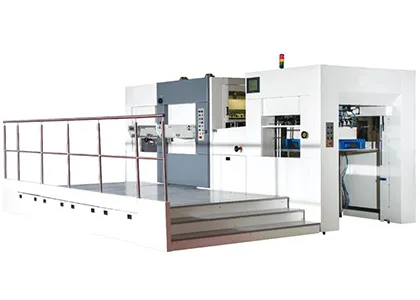
1. Clean Before You Cut: The Overlooked Foundation
Accelerated wear seldom starts with a dramatic failure. It usually begins with small accumulations—paper dust packed into gear teeth, adhesive residue building up on cutting surfaces, or fine debris working its way into bearings. These seemingly minor contaminants act as abrasives, gradually eroding precision surfaces and increasing friction throughout the system.
For production units handling paper, film, or adhesive-backed materials, daily cleaning isn't optional. The die body and blades should be cleaned after each production run, with particular attention to the bearer areas that control cut quality. When removing adhesive buildup, wooden tools are preferable to metal ones—they effectively remove residue without risking blade damage.
Beyond surface cleaning, pay attention to the gear system. Oil and material dust inevitably accumulate in gear teeth over time. A weekly gear cleaning routine, combined with proper lubrication, prevents the build-up of abrasive compounds that cause registration issues and premature tooth wear. For deeper cleaning, an annual thorough cleaning of all nooks, ventilation grilles, and internal compartments ensures heat can dissipate properly—overheating quietly shortens component life long before visible signs appear.
2. Lubrication: The Lifeblood of Moving Assemblies
If cleaning is the foundation, lubrication is the heart of equipment longevity. Friction between moving parts is the single most consistent driver of wear, and proper lubrication directly counteracts it. Studies indicate that preventive maintenance programs, when properly executed, can reduce unplanned stoppages by up to 30% and extend component service life by 25–50%.
Daily lubrication of gear meshing areas, chain pins, and moving joints should be standard practice. For high-speed units, applying a thin oil film between roller shoulders and cylinders each day significantly improves wear resistance. Weekly application of high-temperature grease—lithium-based grease is widely recommended—to gear contact points ensures even coverage and prevents dry friction that accelerates tooth wear.
Monthly checks of lubricant levels in reducers and gearboxes are equally important. Signs of contamination or degradation in the oil indicate deeper issues that need attention. And every six months, a complete lubricant change (with old oil drained completely and the tank cleaned before refilling) should be part of your maintenance calendar.
3. Precision Maintenance: What to Check and When
Broad cleaning and lubrication routines are essential, but precision maintenance targeting specific components delivers the greatest return on effort. A structured schedule—daily, weekly, monthly, and quarterly—keeps small problems from escalating into major failures.
Daily checks should include visual inspection for loose fasteners, unusual vibration, and abnormal noise. Listen for changes in operating sound; experienced operators can often detect bearing wear or alignment issues before instruments do. Check motor surface temperature (normally below 60°C) to avoid overload conditions.
Weekly maintenance involves more detailed inspections. Check chain tension—chain sag should not exceed 20mm per meter of span. Verify that auto-lubrication systems are functioning properly. Inspect blade condition for dullness, nicks, or curling. Minor edge wear can sometimes be addressed with a whetstone, but blades with significant damage require immediate replacement to prevent strain on the entire system.
Monthly inspections should focus on wear measurement. Check gear tooth wear: if tooth top wear exceeds 0.2mm, replacement is warranted. Inspect pulleys, rollers, and drive components for signs of uneven wear. Verify reducer oil levels and top up or replace as needed.
Quarterly and annual maintenance should include calibration verification, full alignment checks, and condition-based diagnostics such as vibration analysis and thermal imaging. These predictive techniques detect developing issues—misalignment, bearing fatigue, electrical problems—before they trigger failure.
4. Don‘t Let Obsolescence Outpace Wear
Mechanical failure isn’t the only threat to equipment lifespan. Obsolescence—changes in production requirements, material specifications, or automation standards—can render a perfectly functional unit inadequate long before it wears out.
The most forward-thinking operators plan for this reality from the start. When selecting production equipment, modularity matters. Units designed with upgrade potential—modular sections, allowances for automation retrofits, or integration pathways for new technologies—can evolve alongside your business without requiring full replacement.
Incremental upgrades often extend the useful life of a production line to its full 20-year potential. Whether upgrading control systems, replacing worn components with improved versions, or adding automation features to compensate for labor shortages, small strategic investments at key intervals keep equipment relevant and productive.
If you‘re evaluating equipment that can adapt to future demands while maintaining reliability, explore the range of modular production solutions designed with long-term flexibility in mind.
5. Operators: The Human Factor in Equipment Longevity
Even the most meticulously maintained production unit will fail prematurely if operated incorrectly. Operator behavior has a direct and measurable impact on service life. Consistent loading within design limits, adherence to recommended operating speeds, and respect for the unit’s physical constraints all reduce unnecessary stress on mechanical systems.
Small operational choices, repeated across thousands of production cycles, accumulate into significant differences in equipment condition. A unit consistently operated at or near maximum rated speed experiences accelerated fatigue across bearings, gears, and drive components. One operated at moderate speeds with consistent loading and proper warm-up periods can last years longer.
Training isn‘t a one-time event. Regular refresher sessions, clear standard operating procedures, and open communication channels for reporting unusual observations all contribute to a culture of equipment care. When operators understand not just how to run a unit but why certain practices matter, they become active partners in service life extension rather than passive users.
6. Environmental Control: The Quiet Factor
The environment in which equipment operates plays a surprisingly large role in determining service life. Dust, humidity, temperature extremes, and vibration all contribute to accelerated wear. Production units installed in clean, climate-controlled environments typically last substantially longer than those operating in harsh conditions.
For units handling adhesive or ink materials, humidity control is particularly important. Excess moisture can cause material handling issues that stress feed systems. On the other end of the spectrum, dry dusty environments introduce abrasive particles that accelerate wear on bearings, gears, and cutting surfaces.
Basic environmental measures pay dividends: adequate ventilation to prevent heat buildup, dust collection systems to minimize airborne particles, and stable flooring to reduce vibration transmission. These aren‘t glamorous investments, but they directly translate into longer component life and fewer unplanned repairs.
7. Spare Parts Strategy: Planning Before Failure
Reactive maintenance is the most expensive approach to equipment care. When a critical component fails and no replacement is on hand, production stops—and emergency procurement typically costs two to four times what planned replacement would have.
A smart spare parts inventory balances cost against risk. Identify components with predictable wear patterns—blades, belts, bearings, filters—and maintain appropriate stock levels based on usage frequency and lead time. For less predictable failures, establish relationships with suppliers who can deliver quickly.
But a parts strategy alone isn‘t enough. Schedule planned replacements based on operating hours or calendar intervals, not on failure. Replacing a bearing during scheduled downtime costs far less than replacing the same bearing plus whatever it damages when it fails unexpectedly.
Final Thoughts: The Economics of Extended Service Life
Extending the service life of production processing units isn’t just about reducing repair costs—it‘s about fundamentally improving the economics of your operation. A die-cutting machine or any other production asset that delivers 15–20 years of reliable service instead of 8–10 years effectively cuts its annualized cost of ownership in half.
The principles outlined above—daily cleaning, systematic lubrication, structured inspections, operator training, environmental control, and strategic spare parts management—don’t require massive capital investment. They require discipline and consistency. And that discipline pays off in reduced downtime, lower maintenance costs, and equipment that continues performing at spec year after year.
If your production goals include maximizing equipment longevity while maintaining consistent output quality, consider exploring solutions built specifically for durability and ease of maintenance. Learn more about high-performance production machinery designed for long-term value