 English
 Español
Your best-selling rigid box got a facelift. The marketing team added a magnetic closure, slightly reduced the footprint to cut shipping costs, and switched to a textured paper wrap that feels more luxurious. For the brand, it’s a refresh. For you, the packaging manager, it’s a two-week headache: new tooling, trial runs, half the line standing idle while the other half churns out scrap.
Short product lifecycles are no longer a cosmetics-and-electronics exclusive. Even spirits, confectionery, and homeware brands now launch seasonal limited editions at a cadence that would have been unthinkable ten years ago. According to Smithers’ The Future of Rigid Boxes to 2028, more than 40% of rigid box converters report an increase in format-change requests year on year. The line that was perfect for your 2022 volumes suddenly feels like a straitjacket.
The root cause isn’t the machine’s age. It’s the architectural assumption it was built on: that changeovers are exceptional events. Traditional rigid box equipment was engineered around a single size range, with change parts that require mechanical skill, time, and a generous tolerance for trial and error. The business problem isn’t a broken machine—it’s a machine that wasn’t designed for a world where “standard” changes every quarter.
The Modular Alternative – Start Where It Hurts Most
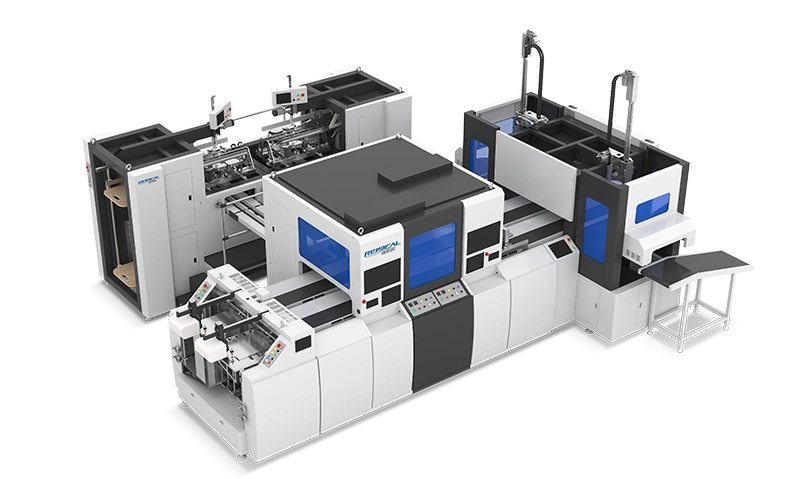
A full-line replacement isn’t the only answer. Modular upgrade philosophy lets you surgically address the stations where format changes eat the most time, while leaving proven, stable processes untouched. Think of it like upgrading the lens on a camera rather than buying a new body—you get the capability you need without duplicating what already works.
Three modules typically yield the fastest payback when product variability spikes:
1. Quick-Change Forming Stations
The heart of any box line is the forming area where wrap material meets substrate. Older stations often rely on bolt-on cavity sets and manual nip adjustments. Modern quick-change modules use servo-driven size memories, pneumatic clamping, and tool-less changeover carts. A complete size swap that used to take a crew 45 minutes can drop to under 10. Look for forming modules that let you pre-load the next job’s tooling offline while the current order runs.
2. Adaptive Feeding Systems
New box formats frequently come with new substrate thicknesses or paper wraps. A feeding system calibrated for 1.5mm greyboard may choke on 2mm, and a wrap feeder tuned for smooth art paper will slip on textured stock. Upgrading to an adaptive feeding unit—with independent vacuum zones, sensor-controlled sheet separation, and recipe-driven gap settings—future-proofs the front end of the line against almost any material the design department dreams up.
3. Intelligent Wrapping and Pressing Modules
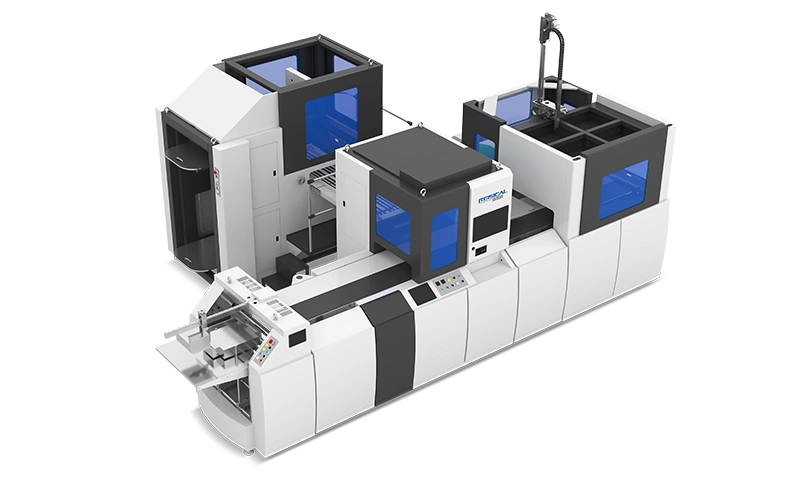
Texture changes, window patches, and foil-stamped areas create inconsistent surfaces that confuse fixed-pressure wrapping rollers. A modular wrapping station with linear motor pressure control can map the surface topography and vary nip force in real time, eliminating bubbles without crushing delicate areas. Combined with active pressing zones that adjust dwell time per box format, the module guarantees a clean finish on the trickiest new designs.
Mapping Your Upgrade Path – A Practical Framework
Before you request a quote, run a two-week data exercise. Attach a simple log sheet to each major station and ask operators to record every stop, whether it’s a material jam, a size adjustment, or a quality check halt. Categorize the stops and calculate the cost of lost production at your average line rate.
Most converters find that 60–70% of their total downtime clusters around two stations—often the forming die area and the wrap feeder. That’s your upgrade priority. Resist the temptation to rebuild the entire line at once; a phased approach reduces risk and lets your operators absorb one change before the next arrives.
Match the module to the problem, not the catalogue. If your bottleneck is mechanical setup time, prioritize quick-change forming stations. If it’s material handling misfeeds, start with the adaptive feeder. If your reject rate climbs on new surface materials, the intelligent wrapping module becomes the smartest first spend.
One Converter’s Experience (Without the Brochure)
A mid-sized folding carton and rigid box plant in the Netherlands faced exactly this dilemma. Their line was running profitably on three core formats for a premium coffee client. When the client introduced a 50g-count gift box variant—same footprint, but shallower depth and a soft-touch laminate wrap—reject rates hit 18% and changeover time ballooned to two hours.
Rather than retire a machine with years of useful life remaining, the plant piloted a single versatile box line upgrade option that targeted the wrapping station. The module’s pressure-mapping software learned the laminate’s slip characteristics within 20 test cycles. Rejects fell below 2%, and the team retained the flexibility to run the original three formats without any modification. Next on their roadmap: a forming station retrofit to handle a forthcoming range of hexagonal bases.
This “one module at a time” approach turned a capital-expenditure crisis into an operational expense line item, and more importantly, it didn’t poison the well with the production team. The operators became champions of the upgrade because they weren’t asked to swallow a whole new system in one go.
Designing for the Next New Product, Not Just This One
A modular retrofit buys time, but it shouldn’t be a one-off fix. Use the project to establish a line architecture that makes the next adaptation even easier. A few guiding principles:
-
Insist on recipe-based control. Every new format should be stored as a digital recipe—dimensions, pressures, speeds, registration offsets. The first time a job runs, it’s an engineering exercise. The second time, it’s a single tap on an HMI.
-
Standardize your interface points. When you add a quick-change forming module, ensure it talks the same protocol as your existing conveyor and glue systems. Gateways and translators introduce latency; native integration doesn’t.
-
Reserve mechanical space. If you suspect a future need for an additional wrap stage or a different folding geometry, leave room on the frame and pre-wire power. It costs pennies today, saves days later.
Where to Go from Here
The business case for modular upgrades writes itself: it’s the difference between a major capex cycle every seven years and a continuous improvement model that matches the speed of your brand clients. The trick is knowing which module to start with, and why.
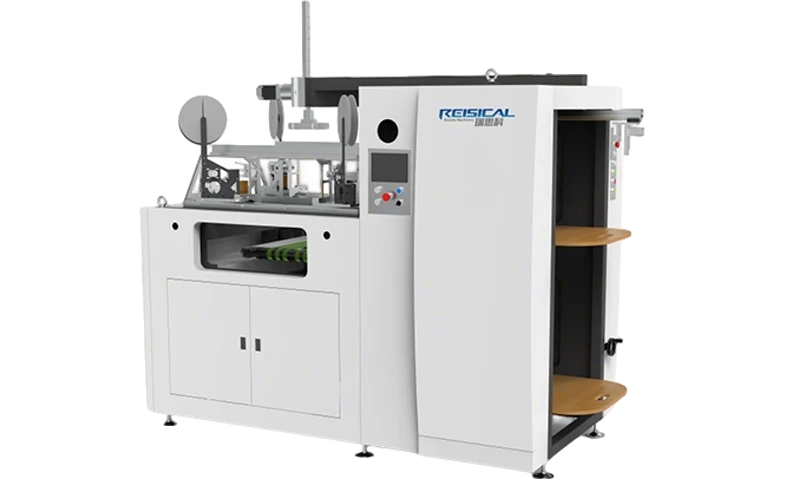
If the framework above resonates, you may want to explore quick-change forming systems for rigid boxes that are purpose-built to drop into existing lines with minimal surgery. The goal isn’t to bolt on complexity; it’s to decouple your line from any single format so thoroughly that your sales team can say “yes” to a new box design without glancing at the production calendar.
Different factories start in different places. Some prioritize feeders; others go straight for the wrapping module. If you need a sounding board to think through the decision, Ruisike’s modular upgrading kits and consultation can help you build a phased plan that makes financial sense for your specific mix of orders—not for a hypothetical average plant. The ideal outcome isn’t a shiny new line. It’s a line you already trust, doing things your competitors still think require a greenfield investment.
Disclaimer: The case study shared above is a composite based on multiple customer experiences and does not disclose confidential information of any single client. All data and performance figures should be verified against your own production environment. References to industry data from Smithers are based on publicly available summary reports and are accurate as of the publication date.