 English
 Español
The numbers were staring the production manager in the face—12.4% material waste on a 50,000-sheet run of double-wall corrugated board. That’s over six thousand sheets going straight into the baler, not onto a pallet. And while the finance team blamed operator error and the operators blamed inconsistent board quality, the real culprit was a patchwork of small, overlooked decisions that quietly ate into margin on every single job.
Waste in large-volume sheet processing rarely has a single dramatic cause. It’s the accumulation of micro-losses: a nest that leaves 8% more skeleton than necessary, a clamp pressure that shifts the stack by half a millimeter, a blade that stays in service two weeks too long. Tackle these systematically, and the improvement can be dramatic—one rigid box manufacturer I worked with brought their trim waste from 18% down to 9.5% without changing their primary forming equipment. They simply redesigned the workflow around the cutting stage.
The following strategies focus exactly on that: practical, high-impact changes you can make before you ever think about replacing an entire line.
Rethink nesting as a dynamic process, not a one-time setup
Most facilities still treat nest patterns as static templates. They run the same layout for a job whether the order quantity is 2,000 or 20,000. That’s the first and most expensive mistake. Modern nesting algorithms can recalculate layout based on real-time variables—sheet dimensions, grain direction, even minor bow in the board. According to a 2023 Smithers report on packaging workflow optimization, dynamic nesting can reduce usable board waste by 5–10% on mixed-SKU runs.
Action step: if you’re using CAD/CAM software, enable automatic re-nesting for runs exceeding a threshold (e.g., 5,000 sheets). For companies still relying on manual layout, this alone often justifies the transition to an integrated manufacturing execution system. Before committing to a specific setup, it’s worth reviewing how well your current cutting station communicates with upstream prepress—many of the high-precision sheet cutting and creasing lines available today come with software that bridges this exact gap, but the principle applies even if you’re upgrading incrementally.
Calibrate for the material, not just the machine
A cutting machine that holds ±0.1 mm on 1 mm greyboard might wander to ±0.4 mm on 3 mm honeycomb panel—yet many operators use the same zero point for everything. That drift translates into parts that creep out of square, which in turn means wider trim allowances “just to be safe.” Over 100,000 sheets, a 0.3 mm error that forces an extra 1.5 mm of safety margin consumes 150 linear meters of additional material.
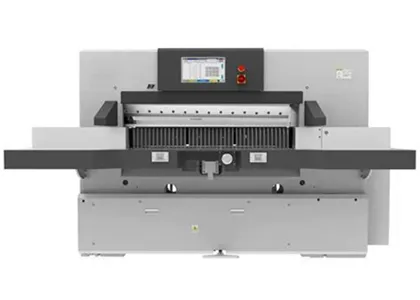
Create a material-specific calibration card. For each substrate family (e.g., B-flute, E-flute, rigid chipboard, plastic sheet), log the optimal clamp pressure, backgauge speed, and blade extension. Verify at shift start and after every material change using a test coupon with critical angles. One heavy duty paper cutter set up with stored material profiles can maintain accuracy across different substrates without constant manual adjustment—but the profiles need to be built on real measurements, not the manufacturer’s generic defaults.
Automate the “grey zone” between cutting and waste removal
Where I see the largest hidden losses is the moment between the cut and the separation. Manually stripping offcuts from a full pallet of die-cut sheets is slow and inconsistent; tired operators leave more “safety” material around complex shapes, or worse, accidentally mix trim back into good stacks. Automation here pays back in two ways: it removes the variability and it generates clean, uncontaminated waste streams that recyclers pay more for.
Adding automatic stripping, robotic offload, or even a simple air-blown scrap conveyor on the outfeed side of your process can lift net utilization by 2–3 percentage points—a figure that goes straight to the bottom line. When scoping out upgrades, many converters look for integrated feeding and automatic waste stripping systems that can be retrofitted to existing machinery, avoiding a full-line rebuild while capturing the efficiency gain.
Turn maintenance from a calendar task into a condition-based discipline
Blade sharpness is the obvious one, but equally important are gripper bars, backgauge parallelism, and the flatness of the cutting table itself. I’ve witnessed a shop where a worn gripper bar was causing micro-slippage on every 7th sheet—a fault that wasn’t caught until the final quality check, by which time 14% of the run was out of spec.
Adopt a condition-based trigger: replace or regrind the blade not after X thousand cuts, but when the cut edge shows a predefined burr height (measure with a simple 10x loupe). Check backgauge squareness daily with a dial indicator and a master square. These practices keep the cut path predictable, so you can shrink trim allowances confidently. For operations running around the clock, some of the high-durability servo-driven cutting tables now integrate self-diagnostics that alert you before a calibration drift turns into scrap, but the maintenance philosophy matters more than any single hardware feature.
When it’s time to look at the bigger picture
All four strategies above can be implemented on existing equipment with training and process discipline. But there comes a point where the platform itself becomes the ceiling—where the machine’s top speed, its maximum sheet size, or its repeatability limit the waste reductions you can achieve. At that stage, evaluating a purpose-built system that ties together feeding, cutting, and stripping under a single control architecture starts to make financial sense.
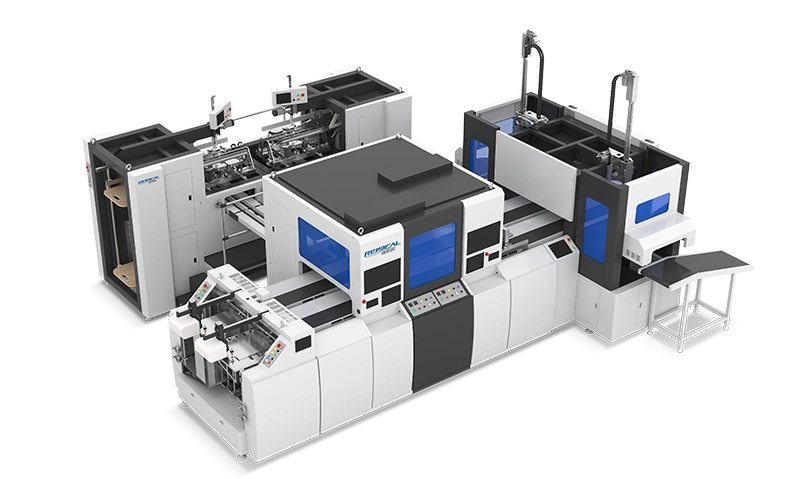
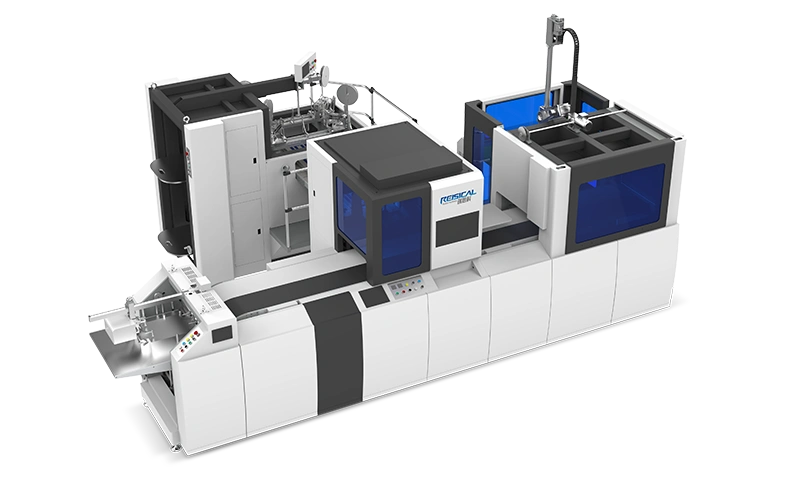
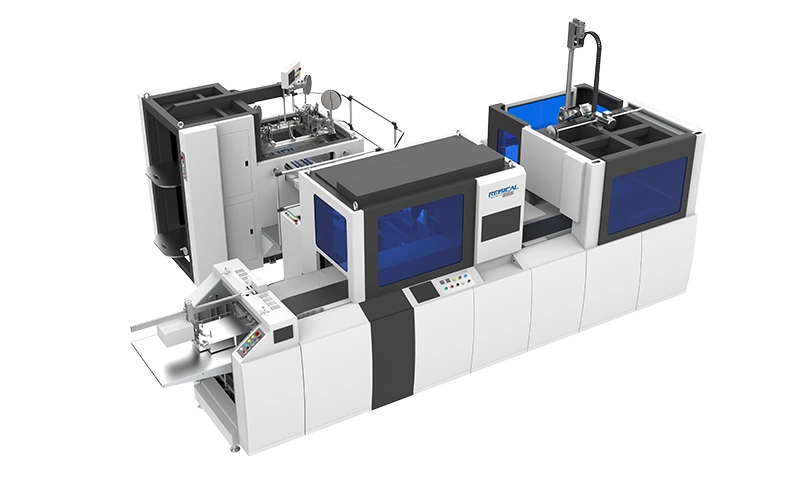
If you’d like to see how a fully integrated approach handles mixed materials and large-format sheets, Ruisike’s sheet processing machinery lineup illustrates what’s possible when high-volume cutting and material optimization are designed as a single, seamless workflow rather than bolted together from separate components. The configurations vary widely, so it’s less about a specific model and more about how the entire stream—from infeed to palletized output—preserves every square centimeter of usable board.
No matter which path you take, the principle remains the same: waste is almost never a material problem. It’s an information and alignment problem. Nail the nest, lock in calibration, automate the grey zones, and maintain based on evidence rather than a calendar—and those 12% waste figures will start looking like a distant memory.
Disclaimer: This article provides general process improvement guidance. Specific results depend on material type, machine condition, and operator training. Always consult your equipment manufacturer before modifying operational parameters.