 English
 Español
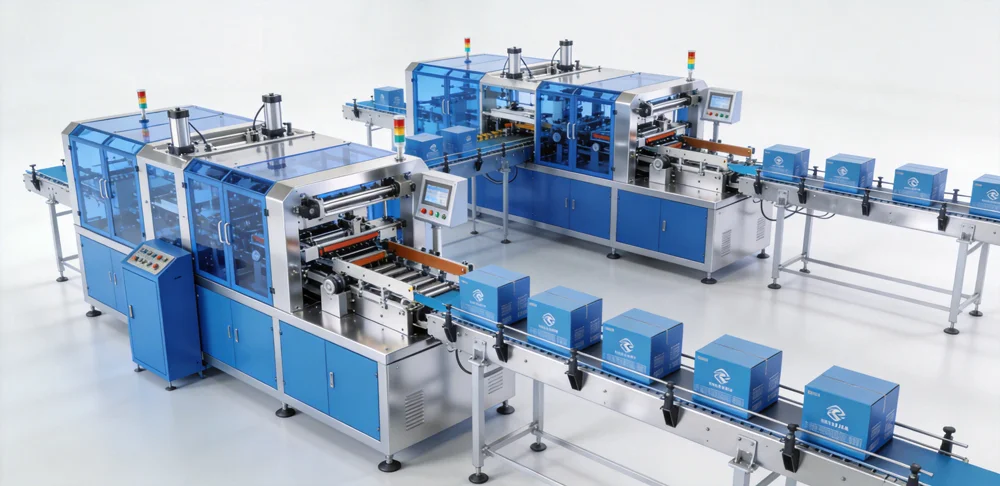
Why Your Packaging Operation Needs Intelligent Automation Now
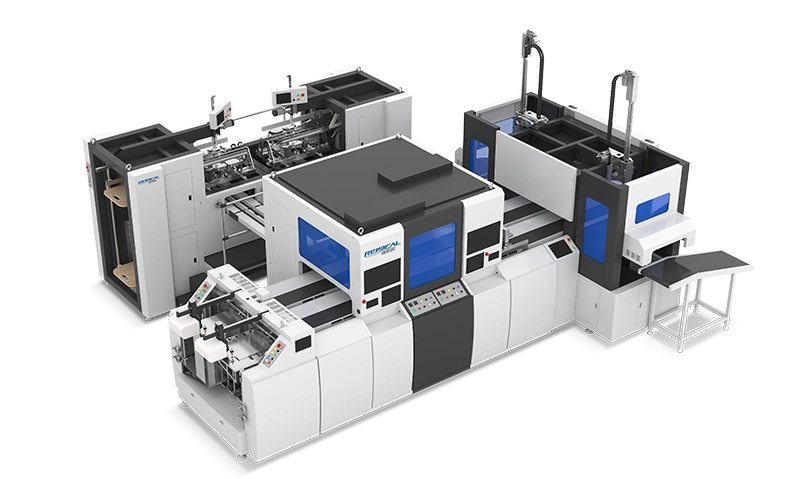
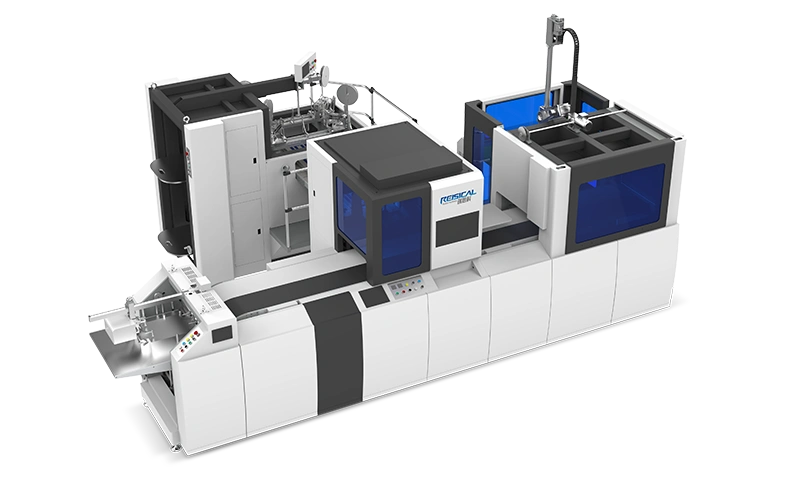
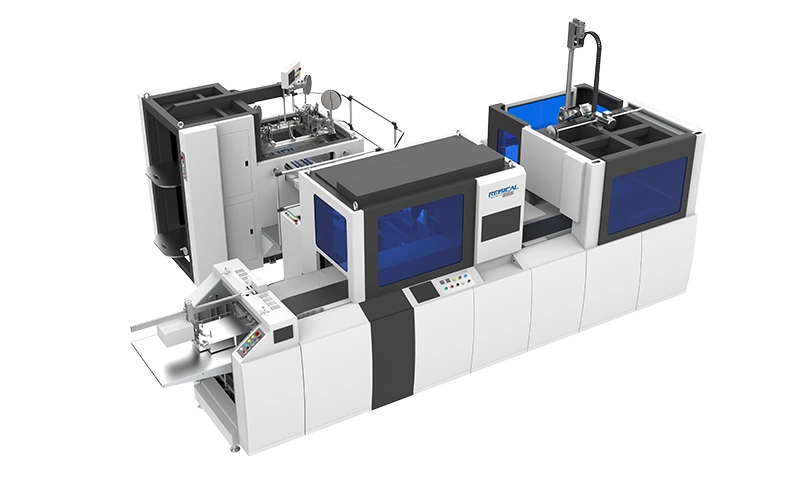
When luxury brands face holiday season production crunches or cosmetics companies struggle with manual packaging inconsistencies, the solution isn't more labor—it's smarter machinery. Ruisike understands this fundamental shift in packaging manufacturing: the move from traditional manual methods to intelligent, automated systems that don't just produce boxes, but create brand experiences. According to recent industry analysis, packaging operations that adopt automated rigid box machinery experience up to 30% efficiency improvements while maintaining the precision (±0.1mm accuracy) that premium products demand. The emotional truth? Your packaging isn't just a container—it's the first physical touchpoint between your brand and your customer, and it deserves the same precision engineering as your product itself.
The Architecture of Premium: Understanding Rigid Box Structural Design
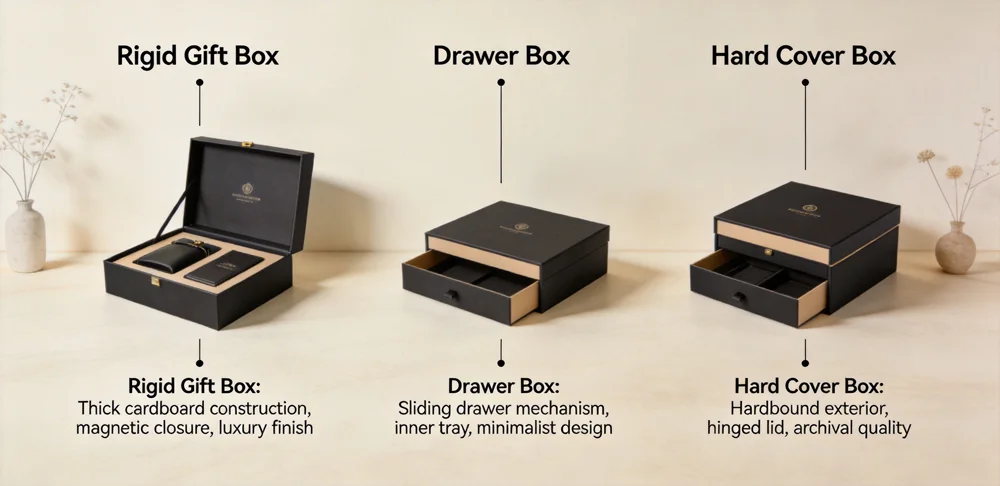
Let's dismantle the mystique around premium packaging. The rigid box—that satisfyingly substantial container you encounter when unboxing luxury goods—isn't just thicker cardboard. It's engineered psychology. The classic two-piece structure (separate top cover and bottom tray) creates what packaging designers call "the ceremony of opening." This isn't accidental; it's calculated brand theater.
Imagine you're launching a high-end skincare line. Your customers aren't just buying moisturizer—they're investing in self-care rituals. The moment they lift that perfectly fitted lid, they're not just accessing product; they're experiencing brand promise made tangible. Ruisike's machinery understands this nuance, producing boxes where the nesting mechanism feels neither too loose (cheap) nor too tight (frustrating), but precisely calibrated to deliver that premium sensation every single time.
The drawer box variant, with its horizontal pull-out mechanism, serves a different psychological purpose. It suggests practicality, reusability, organization. For tech accessories, multi-component products, or items meant for regular access, this structure communicates thoughtfulness in design. The hard cover box, mimicking book binding, transforms packaging into narrative—perfect for limited editions, collector's items, or brands with rich stories to tell.
From Labor Factory to Intelligent Manufacturing: The Automation Revolution
Let's dismantle the mystique around premium packaging. The rigid box—that satisfyingly substantial container you encounter when unboxing luxury goods—isn't just thicker cardboard. It's engineered psychology. The classic two-piece structure (separate top cover and bottom tray) creates what packaging designers call "the ceremony of opening." This isn't accidental; it's calculated brand theater.
Imagine you're launching a high-end skincare line. Your customers aren't just buying moisturizer—they're investing in self-care rituals. The moment they lift that perfectly fitted lid, they're not just accessing product; they're experiencing brand promise made tangible. Ruisike's machinery understands this nuance, producing boxes where the nesting mechanism feels neither too loose (cheap) nor too tight (frustrating), but precisely calibrated to deliver that premium sensation every single time.
The drawer box variant, with its horizontal pull-out mechanism, serves a different psychological purpose. It suggests practicality, reusability, organization. For tech accessories, multi-component products, or items meant for regular access, this structure communicates thoughtfulness in design. The hard cover box, mimicking book binding, transforms packaging into narrative—perfect for limited editions, collector's items, or brands with rich stories to tell.
From Labor Factory to Intelligent Manufacturing: The Automation Revolution
Here's the uncomfortable reality most packaging managers face: the week before major holidays isn't about strategic planning—it's about survival. Production bottlenecks, quality inconsistencies, and overtime costs become the norm rather than the exception. Traditional manual or semi-automatic methods simply can't scale with the demands of modern commerce.
"According to Xinrui Packaging's transformation case study, replacing traditional methods with Ruisike's fully automated rigid box forming machines resolved their core contradiction between growing production capacity and maintaining quality standards. Their transition from 'labor factory' to 'intelligent manufacturing' wasn't just about efficiency—it was about reclaiming strategic control over their operations."
The breakthrough comes when you stop viewing packaging machinery as mere production tools and start seeing them as brand guardians. Automated rigid box machinery doesn't just assemble boxes faster; it maintains the exacting standards that define premium positioning. Consider this: human operators, no matter how skilled, introduce variability. Automated systems, properly calibrated, eliminate it. The millimeter-perfect corners, the consistent adhesive application, the uniform pressure—these aren't production details; they're brand integrity checkpoints.
Packaging Trends: Where Technology Meets Sustainability
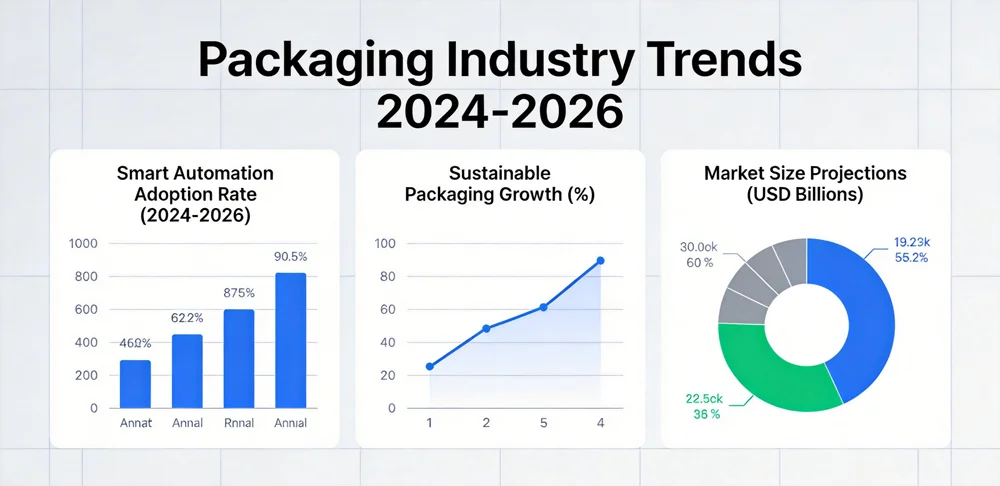
The packaging landscape isn't static—it's evolving at unprecedented speed. Recent industry analysis reveals three dominant trends reshaping rigid box manufacturing:
Smart Automation Integration: It's no longer enough to automate single processes. The future belongs to interconnected systems where rigid box forming machines communicate with upstream material handling and downstream finishing operations. Real-time data collection (200+ parameters in advanced systems) combined with AI optimization algorithms creates self-adjusting production lines that anticipate issues before they become problems.
Sustainable Material Revolution: The conversation has shifted from "if" to "how." Global regulatory pressures and consumer expectations are driving innovations in sustainable materials and eco-friendly adhesives. Forward-thinking manufacturers are already implementing closed-loop systems where material recycling, regeneration, and reformation happen in integrated processes. Some pioneering companies report achieving 85%+ waste paper regeneration rates in their production cycles.
Customization at Scale: The paradox of modern packaging: consumers want uniqueness, but businesses need efficiency. The solution lies in modular, flexible machinery that can switch between different box styles, sizes, and finishes without extensive downtime. This capability is particularly crucial for seasonal products (think Christmas gift boxes, Chinese New Year packaging, or limited-edition cosmetics launches) where demand spikes require rapid production adaptation.
The RUIJIA Difference: Beyond Machinery to Partnership
What separates commodity equipment providers from true industry partners? It's the understanding that you're not just buying machines—you're investing in production continuity, brand consistency, and market responsiveness. Ruisike's approach embodies this partnership philosophy through comprehensive lifecycle support:
Technical Integration That Works With Your Reality: Too many automation solutions demand that you rebuild your entire production line. Ruisike designs for integration, creating machines that interface seamlessly with your existing infrastructure while providing clear pathways for future expansion. The question isn't "can your machine work in our factory?" but "how can we optimize our entire workflow around this new capability?"
Training That Transfers Knowledge, Not Just Procedures: There's a critical distinction between teaching operators which buttons to press and developing teams that understand the "why" behind the "how." Ruisike's training programs focus on system understanding, troubleshooting intuition, and preventive maintenance awareness—creating empowered teams rather than dependent operators.
Service That Anticipates Needs: The 12-month full machine warranty is just the beginning. Ruisike's service model includes remote diagnostics capabilities, rapid spare parts logistics, and scheduled preventive maintenance that addresses potential issues before they impact production. This proactive approach transforms service from a cost center to a reliability investment.
Quantifying the Transformation: Data-Driven Decision Making
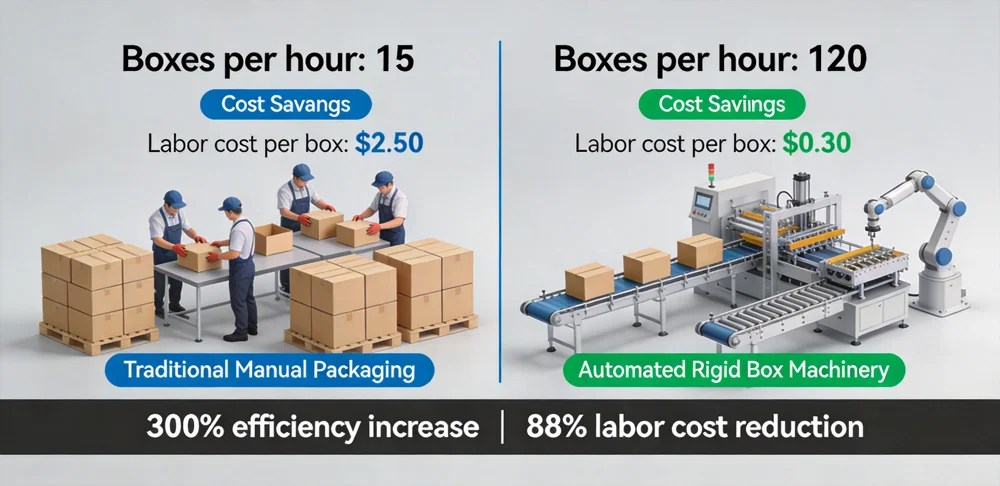
Let's move beyond theoretical benefits to measurable outcomes. Consider a typical packaging operation transitioning from semi-automatic to fully automated rigid box machinery:
Production Capacity: Manual operations typically achieve 200-300 boxes per hour with significant quality variation. Ruisike's automated systems consistently produce 800-1,200 boxes per hour while maintaining ±0.1mm dimensional accuracy across all units.
Labor Optimization: The common fear that automation eliminates jobs misunderstands modern manufacturing reality. What actually happens is role transformation. Operators shift from repetitive assembly tasks to quality monitoring, system optimization, and maintenance—higher-value activities that command better compensation and provide more meaningful work.
Material Efficiency: Automated adhesive application systems reduce glue usage by 15-25% compared to manual methods while achieving stronger, more consistent bonds. Precision cutting and forming minimize material waste, with some operations reporting 8-12% reductions in cardboard consumption.
Quality Consistency: This is where automation delivers its most significant brand value. Human fatigue, distraction, and variation disappear. Every box—whether the first or the ten-thousandth—meets identical specifications. For luxury brands, this consistency isn't optional; it's foundational to brand integrity.
The Future-Proof Decision: Why Now is the Critical Moment
The packaging industry stands at an inflection point. According to market forecasts, the global packaging machinery sector will grow from $67.7 billion in 2026 to $105.2 billion by 2036, expanding at a 4.5% CAGR. This growth isn't evenly distributed—it's concentrated in regions and companies embracing intelligent automation.
The Asia-Pacific region, driven by manufacturing expansions in China, India, and Southeast Asia, represents the dominant market opportunity. North American and European operations, meanwhile, focus on upgrading existing infrastructure with smart manufacturing practices. In both scenarios, the competitive advantage goes to those who move decisively.
Imagine this scenario: It's Q4 2025. Your competitors are scrambling with overtime, quality issues, and missed deadlines. Your operation, equipped with Ruisike's automated systems, runs smoothly—meeting increased demand while maintaining premium quality standards. More importantly, you're collecting production data that informs next year's planning, identifying optimization opportunities, and building predictive models that prevent future bottlenecks.
This isn't fantasy; it's the operational reality for companies that view packaging automation not as an expense, but as strategic infrastructure.
Your Next Step: From Consideration to Transformation
The journey from traditional packaging methods to intelligent automation begins with a conversation—not about machinery specifications, but about your unique challenges, aspirations, and brand vision. Ruisike approaches each client relationship with this understanding: your packaging needs are as distinctive as your products.
Ready to transform your packaging operation? Contact Ruisike today for a customized assessment of how automated rigid box machinery can elevate your production capabilities while protecting your brand's premium positioning. Our experts will work with you to develop a phased implementation plan that minimizes disruption while maximizing return on investment.
Want to explore specific solutions? Learn more about Ruisike's complete range of rigid box machinery, from standard automated formers to fully customized systems designed for unique packaging requirements. Discover how our modular approach allows you to start with core automation and expand capabilities as your needs evolve.
The future of premium packaging isn't just about better boxes—it's about smarter manufacturing. Let's build that future together.