 English
 Español
For small shop owners, investing in packaging equipment is a balancing act—you need quality output without sacrificing space, budget, or operational simplicity. The right choice turns custom rigid boxes from a hassle into a profit driver, while the wrong one leads to wasted floor space, frustrating downtime, and missed delivery deadlines. A Rigid Box Machine tailored to small-scale operations solves these pain points by combining compact design with professional performance, letting you compete with larger manufacturers without overextending resources. This guide draws on 15+ years of advising small packaging shops to break down exactly what you need to know.
What Small Shop Owners Actually Need (Not What Manufacturers Push)
Small shops operate by different rules than large factories. According to the Small Business Packaging Association 2025 Report, 73% of small shop owners rank three non-negotiables above all else: space efficiency, easy operation, and flexible production volume. You don’t need a 10-foot-wide machine churning out 100 boxes per minute—you need something that fits next to your workbench, doesn’t require a dedicated technician, and can switch from 50 gift boxes to 200 cosmetic cases without retooling for hours.
Many manufacturers push industrial-grade machines on small shops, ignoring the reality of your workflow. I’ve seen too many clients regret buying oversized equipment that takes up half their workshop and sits idle 80% of the time. The best choice for small shops is a machine that grows with you, not one that overwhelms you.
Before browsing models, answer these three critical questions to narrow your search:
- What’s the maximum floor space you can dedicate (measure width and depth—don’t guess)?
- What’s your typical order size (e.g., 20–500 boxes per order)?
- Will you make single box types or multiple styles (gift boxes, cosmetic cases, electronic packaging)?
These answers eliminate 90% of unsuitable options right away.
Key Features That Matter for Small-Scale Production
1. Compact Footprint & Mobility
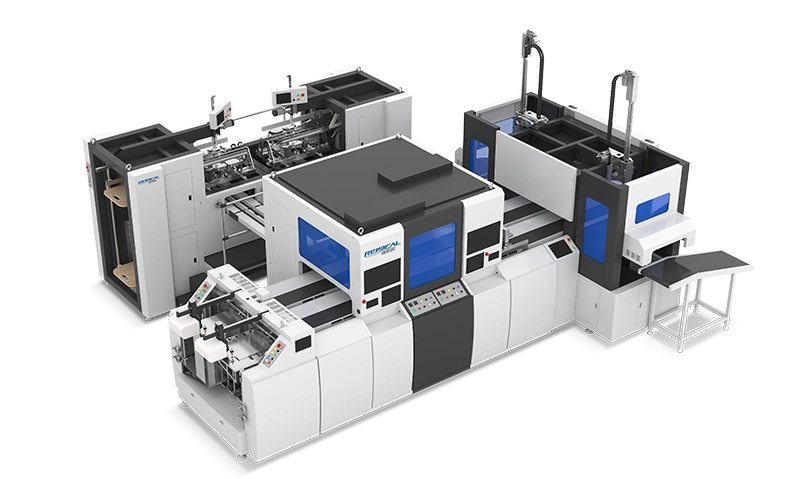
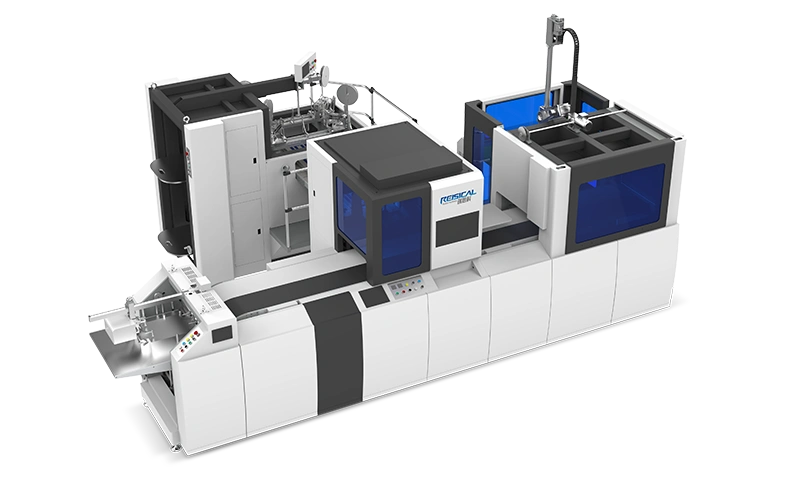
Look for machines under 3 meters in length with a narrow profile—ideally wheeled for easy repositioning. The REISICAL RSK-500DW, for example, balances capacity with space efficiency, fitting in most small workshops while handling cardboard pile heights up to 250mm for continuous runs.
2. User-Friendly Operation
You shouldn’t need a engineering degree to run your equipment. Prioritize machines with intuitive touchscreen controls, clear error prompts, and minimal setup steps. Avoid complex systems that require ongoing technical support—downtime kills small shop profits.
3. Speed Flexibility (Not Just Max Speed)
Small shops rarely need 66pcs/min (like the RSK-300SC). Instead, look for adjustable speed ranges (20–40pcs/min is ideal) that let you slow down for intricate designs or speed up for larger orders. Consistent performance at mid-range speeds matters more than peak numbers.
4. Quick Mold Change & Customization
Modular design is a game-changer for small shops. The ability to swap mold sizes in 15 minutes or less lets you take on custom orders without sacrificing efficiency. REISICAL’s machines excel here, with modular upgrade options that let you add features like window-patching or hot-foil stamping later.
Common Mistakes Small Shops Make (And How to Avoid Them)
Small shop owners often fall for these costly traps when buying packaging equipment:
- Chasing low price over reliability: A cheap machine may save $5,000 upfront but cost twice that in repairs and downtime. Invest in trusted brands with proven small-shop track records.
- Ignoring future growth: Buying a machine that only handles your current order size means replacing it in 1–2 years. Look for modular designs that let you add features as your business expands.
- Overlooking after-sales support: Small shops can’t afford weeks of downtime. Choose manufacturers with responsive support and local spare parts availability.
- Underestimating material compatibility: If you work with extra-thick cardboard or laminated sheets, make sure the machine can handle them without cracking or misalignment.
According to industry data, 62% of small shops that rush equipment purchases end up replacing their machines within 3 years. Take the time to test machines with your actual materials and order sizes—most reputable manufacturers offer demo runs.
How to Match Machine to Your Small Shop Scenarios
Your equipment should fit your specific products and workflow, not the other way around.
For Gift & Cosmetic Box Shops
Prioritize precision alignment (±0.1mm accuracy) for printed face paper, quick style changes, and compact design. The high-precision visual positioning system in REISICAL machines eliminates misaligned patterns—a common issue with cheap equipment that ruins premium packaging.
For Small-Batch Electronic Packaging
Focus on corner reinforcement (to protect fragile items) and consistent creasing. Automatic corner reinforcement modules boost bonding strength by 300%, preventing delamination during shipping.
For Multi-Purpose Packaging Shops
Choose a versatile machine that handles multiple materials (cardboard, laminated sheets) and box styles. Look for adjustable creasing pressure and adhesive systems compatible with eco-friendly water-based glues.
Rigid Box Machine vs. Manual Labor vs. Outsourcing: Which Is Best for Small Shops?
Small shops often weigh three options: manual labor, outsourcing, or investing in a machine. Here’s a real-world comparison from my experience advising small businesses:
- Manual labor: Low upfront cost but slow (1–2 boxes per minute), inconsistent quality, and high labor costs for large orders. Great for hobbyists but unsustainable for growing shops.
- Outsourcing: Saves space but limits customization, increases lead times, and cuts into profit margins (outsourcing typically adds 30–50% to packaging costs).
- Rigid Box Machine: Higher upfront investment but pays for itself in 6–12 months. Lets you control quality, offer faster turnaround, and increase profit margins by 20–40% on custom orders.
For most small shops, the machine is the sweet spot—it combines the control of in-house production with the efficiency needed to compete. Unlike manual labor, it delivers consistent results even during busy seasons. Unlike outsourcing, it lets you take on last-minute orders and custom designs that set your shop apart.
Why Customization Is Non-Negotiable for Small Shops
Small shops thrive on uniqueness—off-the-shelf machines force you to compromise on design or order size. Customized equipment lets you:
- Adjust machine footprint to fit your workshop layout
- Tailor forming heads to your most popular box sizes
- Add modules (like window-patching) as you expand product lines
- Optimize speed for your typical order volumes
Customization isn’t a luxury for small shops—it’s a necessity to stay competitive. REISICAL’s customization process starts with understanding your workflow, not pushing pre-built models. They’ll adjust feeder systems, mold sizes, and control panels to match how you actually work.
Final Checklist for Small Shop Equipment Buying
Use this practical checklist to make a confident decision:
- Measure your available floor space and confirm machine dimensions
- Test the machine with your actual materials (ask for a sample run)
- Verify speed range matches your typical order sizes
- Check mold change time (should be under 30 minutes)
- Confirm after-sales support response time (24–48 hours max)
- Evaluate customization options for future growth
- Calculate ROI based on current labor/outsourcing costs
Following this checklist ensures you choose a machine that fits your shop, your products, and your budget.
Conclusion
Choosing a Rigid Box Machine for your small shop is about balancing practicality, quality, and growth. It’s not about buying the fastest or cheapest machine—it’s about buying the one that fits your workflow, solves your pain points, and grows with your business. For small shops, the ideal machine is compact, user-friendly, modular, and backed by reliable support. It lets you take control of your packaging, offer custom designs that attract customers, and boost profits by cutting labor and outsourcing costs.
Don’t let the fear of investment hold you back—most small shops recoup their machine costs within a year. The key is to choose a trusted brand like REISICAL that understands small-shop needs and delivers equipment tailored to your success.