 English
 Español
The alarm on the slitter-rewinder screams at 2:15 p.m. The operator rushes over, stops the line, and inspects the freshly slit rolls of 80gsm coated paper. The edges are frayed. Microscopic paper dust coats the web. Downstream, this dust will contaminate the printing press’s ink train, causing print defects that the end customer — a cosmetics brand — will never accept. The shift supervisor logs another 45 minutes of unplanned downtime. The root cause isn’t the operator, the paper, or even the slitting blades. It’s a tension spike that a pneumatic braking system couldn’t compensate for in time.
This isn’t an isolated incident. In paper and film converting, slitting is often the silent bottleneck — a process assumed to be “simple” until edge quality, dust generation, or roll geometry issues cascade into costly rework and customer returns. According to a 2024 study by AWA Alexander Watson Associates, converting waste attributable to slitting and winding inefficiencies averages 2.8% of total material input in the label and flexible packaging sectors. For a mid-sized converter processing 200 tonnes monthly, that’s 5.6 tonnes of valuable material scrapped every month.
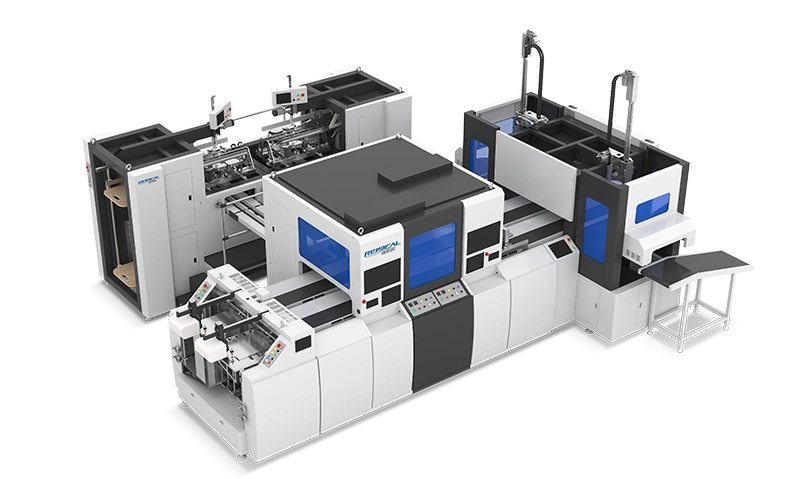
The good news? A quiet revolution in slitting technology — driven by precision servo motors, closed-loop tension control, and automated knife positioning — is helping converters slash that waste by more than half while simultaneously increasing line speeds. Before we dive into the technical details, it’s worth understanding how modern converting lines integrate these functions end-to-end. A look at integrated web converting and handling systems reveals how slitting is no longer an isolated island but part of a synchronized process.
Why Traditional Slitting Methods Are Hitting Their Limits
To understand why servo technology matters, we need to start with the physics of what happens at the cut point. Slitting isn’t just “cutting” — it’s a complex interaction between blade geometry, material properties, web tension, and speed. The three dominant conventional slitting methods each carry inherent weaknesses that become magnified as converters push for higher speeds and thinner materials:
-
Razor slitting — Inexpensive and simple, but blades dull rapidly on abrasive papers or filled films. A dull razor doesn’t cut cleanly; it tears. This generates dust and leaves a jagged edge that can initiate web breaks during subsequent printing or laminating.
-
Rotary shear slitting — Offers better durability, but the cantilevered blade setup in older machines is prone to deflection at high speeds. Even 15 microns of blade runout can create alternating tight and loose edges in the slit rolls, leading to telescoping during transportation.
-
Crush (score) slitting — Works by pressing a hardened knife against a hardened anvil, effectively crushing the material to sever it. The problem? On coated papers and multi-layer films, this crushing action often creates micro-delamination at the cut edge, which later propagates into seal failures in pouch-making.
The common denominator across all three is a dependency on consistent, highly regulated web tension. And that’s where traditional pneumatic or magnetic particle brake unwind systems fall short. They respond to tension fluctuations with a time delay. By the time the brake adjusts, the damage — a burr, a stretched edge, or a dust burst — has already occurred.
The Servo Difference: Precision That Pays for Itself
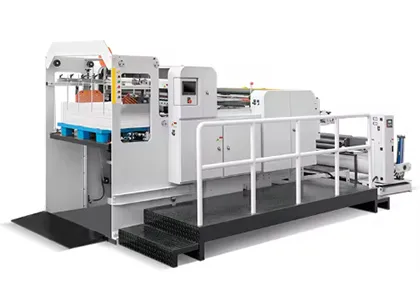
A servo-driven slitting machine addresses the root cause of variability by replacing reactive mechanical systems with proactive, digitally controlled motion. Here’s what that means on the shop floor, broken down by the critical control points:
1. Closed-Loop Tension Control at Every Zone
Modern servo slitters divide the web path into distinct tension zones — unwind, slitting, and rewind — each governed by a dedicated servo motor and load cell feedback. The system measures tension thousands of times per second and adjusts motor torque instantaneously. This means that during acceleration from 0 to 400 m/min, the tension on a 9-micron PET film stays within ±1% of the setpoint, not the ±8% typical of a pneumatic setup. The result: slit rolls with uniform hardness and density from core to outer wrap, eliminating the star-burst or telescoping defects that plague converters shipping slit rolls across continents.
2. Automatic Knife Positioning with Sub-Micron Precision
On a conventional slitter, changing slit widths means a mechanic loosens knife holders, manually measures positions with a ruler, and tightens everything back. Accuracy depends on the technician’s eyesight and patience. Servo-driven positioning systems automate this: operators call up a stored job recipe, and linear servo motors move each knife assembly to its programmed position with accuracy down to ±0.1 mm. Setup time collapses from 20 minutes to under 2 minutes, and — critically — the first slit roll off the machine is a good roll. No more setup scrap.
3. Predictive Maintenance and Process Data
Because servo drives are constantly monitoring torque, speed, and position, they generate a stream of process data that a smart operator or engineer can use. An increasing torque trend on a specific knife holder indicates blade wear days before edge quality visibly degrades. Vibration signatures can predict bearing failure. This shifts maintenance from reactive to scheduled, slashing unplanned downtime.
These three capabilities are not speculative. A label converter in Italy that replaced four legacy slitters with servo-driven machines reported in a 2025 Converting Quarterly case study that setup scrap dropped 72%, edge dust complaints fell 90%, and overall equipment effectiveness (OEE) rose from 61% to 84% within six months.
Is Servo Slitting the Right Move for Your Operation? A Self-Assessment Checklist
Not every converter needs to jump to fully servo-driven slitting immediately. The investment must align with your product mix and pain points. Ask yourself these six questions:
-
Do you regularly run materials thinner than 20 microns or papers lighter than 30 gsm where tension control is hyper-sensitive?
-
Are you performing more than 10 slit-width changeovers per week, eating into productive time?
-
Do you ship slit rolls internationally, requiring perfect roll geometry to survive freight handling?
-
Is dust from slitting causing rejects in your printing, coating, or laminating processes?
-
Have your customers tightened specifications for edge quality or roll hardness variation in the last two years?
-
Is your current slitter capacity preventing you from taking on faster, higher-margin jobs?
If you answered “yes” to three or more, the data strongly suggests that a servo-driven approach will deliver a sub-24-month payback through waste reduction, increased throughput, and quality-driven customer retention. For those curious about how this technology is being implemented in versatile converting machinery, advanced web processing systems with servo integration offer a closer view of real-world configurations that handle both paper and film seamlessly.
One Machine, Many Materials: The Flexibility Imperative
Converters rarely process just one material. A typical mid-sized operation runs coated papers in the morning, PE-coated board after lunch, and 23-micron BOPP film on the night shift. Any new slitting investment must handle this diversity without requiring hours of mechanical changeover.
The key enabler here is recipe-driven automation. A servo-driven slitter stores not just knife positions, but also optimized parameters for:
-
Rewind hardness profile: Different materials need different taper tension curves to prevent blocking (in films) or crushed cores (in heavy papers).
-
Blade overlap and side force: The correct geometry for 100gsm label paper is disastrous for 50-gauge PET. Recipes eliminate guesswork.
-
Lay-on roller pressure: Too high, and you entrain air in the rewinding roll; too low, and the roll is soft and unstable.
For operations that require not just slitting but also formatting into sheets — for instance, when converting paper into cut sheets for digital printing — some systems combine slitting and sheet cutting functions in a modular line. While the primary focus here is on slitting, you can explore how modern flexible converting and formatting lines handle both paper and film with quick-change tooling, ensuring you’re not locked into a single process.
Three Practices That Even a Servo Slitter Can’t Replace
Investing in advanced machinery doesn’t eliminate the need for operational discipline. In fact, a precision servo system will punish poor practices more visibly than a forgiving old pneumatic workhorse. Three non-negotiables for any slitting operation, regardless of technology level:
-
Blade management program — Even the best servo positioning can’t compensate for a dull blade. Implement a strict log of blade running hours, and replace or regrind based on data, not visual inspection. A blade that has processed 200,000 linear meters of abrasive clay-coated paper has likely developed a wear land invisible to the naked eye but devastating to edge quality.
-
Core straightness and quality — A slitter can only build a perfect roll if the core is perfect. Cores with 0.5 mm runout will cause vibration that the servo system will detect but cannot fully cancel. Source cores with a TIR (Total Indicated Runout) specification under 0.1 mm.
-
Climate control for materials — Paper and film properties change with humidity and temperature. A roll of paper that sat in a cold warehouse overnight needs to acclimate to the slitting hall for 24 hours. Running it cold creates condensation and unpredictable friction coefficients, confounding even the smartest tension control algorithm.
Choosing a Partner, Not Just a Machine
When evaluating a servo-driven slitting machine, the specification sheet tells only part of the story. The manufacturer’s understanding of your specific materials, their willingness to run trials with your actual substrates, and the availability of post-installation process optimization support often determine whether a machine becomes a competitive asset or an underutilized capital drain.
Ruisike has built its converting equipment portfolio around this principle: that machinery should adapt to the converter’s reality, not the other way around. For those ready to move beyond fighting daily slitter fires and toward predictable, data-driven converting, you can review Ruisike’s converting line configurations to see how integrated servo-driven systems handle the full gamut from lightweight films to heavy paperboard.
Disclaimer: This article offers general guidance based on converting industry practice and published studies. Machine performance will vary with specific materials, environmental conditions, and maintenance practices. Always consult equipment manufacturers and conduct on-site trials with your own substrates before making purchasing decisions. References to third-party studies are for contextual information and do not imply endorsement.