 English
 Español
It’s 3:00 a.m. on a Wednesday. The third-shift operator at a flexible packaging plant pauses the line. Again. The laminated foil structure that ran perfectly yesterday is now coming off the sheeter with micro-cracks along the cut edge. QC rejects the pallet. The production manager, already under pressure to meet a snack brand’s Friday deadline, stares at 400 kilos of scrapped material.
If this scenario feels familiar — whether it’s edge fray on thin PE film, inconsistent sheet length on PET/AL/PE laminate, or dust generation during high-speed cutting — you’re not alone. Flexible packaging converters worldwide lose an estimated 3–5% of raw material to cutting-related waste, according to a 2025 Smithers report on flexible packaging efficiency. What hurts more is that many of these losses are preventable.
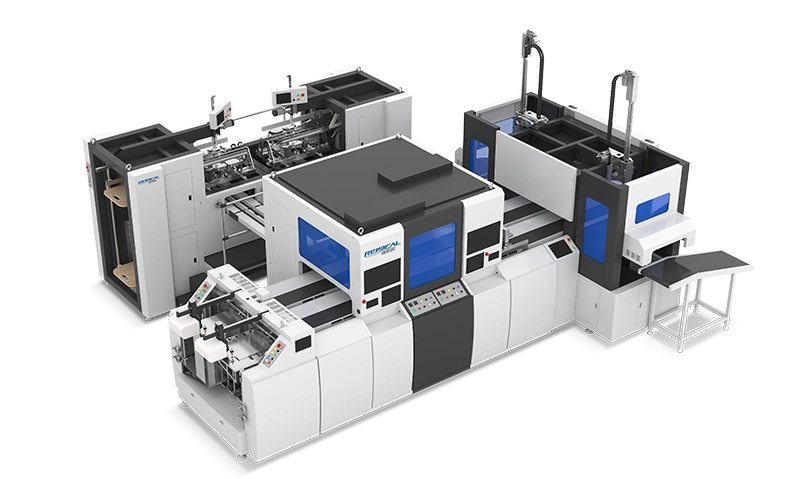
The root cause rarely sits with the operator. It sits upstream, in the mismatch between material characteristics and the cutting mechanism. And that’s where a closer look at how modern sheet cutting systems are engineered can make a tangible difference on your shop floor. Before diving into solutions, it helps to understand what you’re actually working with — because flexible packaging isn’t one material, but a family of constantly changing substrates. A quick look at integrated converting lines for flexible materials can show how the latest equipment is evolving to handle this variability.
The Hidden Complexity of “Simple” Sheet Cutting
On the surface, cutting a roll into sheets sounds straightforward. In practice, flexible packaging materials introduce four variables that turn “straightforward” into a daily headache:
-
Elasticity and memory — Thin LDPE or stretch films elongate under tension, then relax after cutting. A 500 mm sheet measured under tension can be 502 mm two minutes later, enough to cause jams in downstream pouch-making or thermoforming.
-
Multi-layer structures — A typical retort pouch laminate might combine PET, aluminum foil, and CPP. Each layer responds differently to shear force. The blade that perfectly severs the aluminum can crush the polymer layer, creating delamination nucleation points.
-
Surface sensitivity — Coated films, cold seal adhesives, and high-barrier SiOx layers can scratch or haze from the slightest roller contact. Dust generation from a dull blade directly contaminates seal zones, driving up pouch leak rates.
-
Rapid job changes — A converter might run 15 SKU changes per shift, from thin printed bread bags to thick stand-up pouch laminates. The cutting system needs to adapt without lengthy mechanical adjustments.
These aren’t rare edge cases. In conversations with plant engineers across Southeast Asia and Eastern Europe, the same three pain points surface again and again: sheet length deviation exceeding ±0.5 mm, edge quality that varies across the web width, and excessive downtime between material changes. One packaging converter in Thailand reported 22 hours of cumulative lost production per month just from adjusting and replacing shear blades on an older sheeter handling aluminum-coated films.
What Actually Drives Cut Quality? A Quick Diagnostic Framework
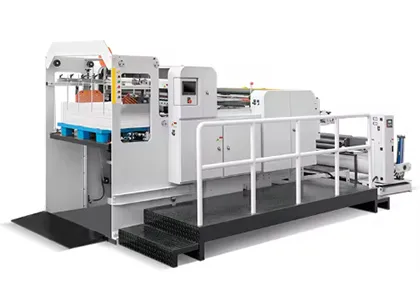
Before specifying a new sheet cutting machine, it’s worth running a quick audit on your current setup. Four areas usually deserve attention:
-
Blade type and geometry — Crush cut, razor cut, rotary shear, or ultrasonic? For instance, rotary shear excels on laminates above 60 microns; razor slitting works beautifully for thin unsupported films but struggles on rigid structures. A mismatch here is the number one cause of edge damage.
-
Tension control architecture — Closed-loop tension with load cell feedback beats open-loop systems hands down for materials with high elongation. The acceptable tension range for 12-micron PET is completely different from that for 80-micron LLDPE. Without automatic recipe-based tension, operators resort to trial and error.
-
Blade holder precision and alignment — Runout exceeding 10 microns on a rotary blade translates directly to inconsistent sheet length across the web. Blade-to-anvil clearance must be maintained within material-specific tolerances — often as tight as 2–5 microns for thin films.
-
Material handling path — The fewer direction changes between unwind and stacker, the lower the risk of scratching or static buildup. Ionized air bars at the delivery end can reduce static-driven misalignment in the stacking section.
A quick reality check: if your team is still using manual adjustment knobs for blade pressure or relying on the operator’s “feel” for tension, you’re almost certainly leaving money on the table. Modern servo-driven systems offer recipe storage that can recall cutting parameters for hundreds of SKUs, cutting changeover times from 20 minutes to under 90 seconds. When you’re evaluating configurable sheet cutting and stacking systems, look for these precision features as non-negotiables.
From Bottleneck to Competitive Advantage: Key Capability Upgrades
The good news? The technology has evolved significantly. Here are three capability upgrades that converters are using to turn their sheeting operation from a bottleneck into a competitive differentiator:
1. Automatic Knife Positioning and Calibration
Instead of manual blade adjustment, the latest systems use servo-driven knife holders that auto-position based on the selected recipe. An integrated laser measurement system verifies knife-to-knife distance to ±5 microns before the first sheet is cut. One European converter reduced setup scrap from 15 kg per job change to under 2 kg after adopting this feature — across 200 job changes per month, that’s over 30 tonnes of material saved annually.
2. Intelligent Tension Zones
Modern roll-to-sheet cutter designs segment the web path into independent tension zones — unwind, process, and outfeed — each with its own driven roller and load cell. This means the unwind can maintain low tension to prevent telescoping while the cutting zone operates at higher, more stable tension for precision. The system automatically compensates for roll diameter reduction as the unwind progresses, maintaining consistent cut registration from full roll to core.
3. Vision-Based Quality Inspection at Full Speed
Inline camera systems now inspect sheet length, edge quality, and print registration at line speeds exceeding 100 meters per minute. Defective sheets are ejected automatically without stopping the machine. The data feeds back to the line controller for real-time adjustment. This closes the loop that traditional sheeters leave wide open.
Matching the Machine to the Material — Not the Other Way Around
A common mistake is to buy a high-spec cutter and then force all materials to run on it with the same setup. The smarter approach is to define your material envelope first. Here’s a simple decision matrix used by a packaging consultant I spoke with last year, who has optimized over 40 converting lines across Asia:
| Material Category | Recommended Cut Method | Key Watch-Out |
| Unsupported films (PE, BOPP) ≤ 50 µm | Rotary shear with hardened blades | Static control at stacker; tension ≤ 0.5% of yield strength |
| Laminates (PET/PE, PET/AL/PE) 50–150 µm | Rotary shear or crush cut with polyurethane anvil | Blade replacement frequency; aluminum can accelerate wear |
| Heavy-duty laminates (AL foil centered) > 150 µm | Guillotine or heavy-duty rotary shear | Sheet flatness post-cut; may require decurler |
| Biodegradable films (PLA, PHA) | Ultrasonic cutting | Heat generated by ultrasonic can seal edges unexpectedly; test thoroughly |
| Metallized films, cold seal coated | Razor in air (supported) or fine-grit rotary shear | Blade contact pressure must be minimal to prevent coating lift |
Notice that there is no single “best” method. The optimal setup depends on the specific material, thickness, coating, and even the ambient humidity in your plant. A roll-to-sheet cutter that does a stellar job on 100-micron retort laminate may struggle on 20-micron bread bag film unless it is specifically designed with that range in mind. When you need to handle a broad material spectrum on the same line, modularity and quick-change tooling become the deciding factors. You can explore high-flexibility converting solutions designed to accommodate diverse substrates without compromising precision.
Five Maintenance Rituals That Keep a Sheeter Running True
Even the best-engineered system will drift without disciplined maintenance. Drawing from maintenance logs at several converter sites, here are five rituals that separate high-uptime lines from chronic underperformers:
-
Weekly blade edge inspection under magnification (minimum 30x) — Look for micro-chipping, not just visible wear. A chip that’s invisible to the naked eye can create a repeating defect every rotation. Replace blades proactively; the cost of a blade set is a fraction of the value of scrapped laminate.
-
Monthly anvil/roller runout measurement — Use a dial indicator to check runout across the full roller width. Runout exceeding 12 microns on a crush-cut anvil will cause uneven cut depth and premature blade wear. Resurface or replace as needed.
-
Quarterly tension calibration — Load cells drift over time. A quarterly calibration with certified weights ensures your 20-newton setpoint is actually 20 newtons, not 23. Even a 10% error on thin films can push tension past the material’s elastic limit.
-
Static bar cleaning and testing — Static bars collect dust and lose efficiency. Clean ionizing needles weekly with a soft brush and isopropyl alcohol. Use a handheld static meter to verify performance; target residual charge under 1 kV at the delivery pile.
-
Documented recipe audits — Every six months, physically verify that saved recipes still match the actual material. Film suppliers occasionally tweak formulations; a slight change in slip additive can alter friction and affect sheet stacking behavior.
These rituals don’t require special skills, just consistency. And they pay for themselves rapidly: a single unplanned downtime event on a sheeter that feeds downstream form-fill-seal or pouch-making lines can cascade into thousands of euros in lost output within hours.
Is It Time to Rethink Your Cutting Strategy?
Ask yourself these three questions:
-
Are sheet length deviations currently limiting your ability to run at higher line speeds downstream?
-
Do material changeovers consume more than 5% of your available production time?
-
Is cutting-related scrap consistently above 1.5% of total material input?
If the answer to any of these is “yes,” the bottleneck likely isn’t your operators — it’s the equipment’s ability to adapt to today’s material diversity and job-change frequency. The solution isn’t necessarily a higher-speed machine; it’s a smarter one with automatic setup, closed-loop quality control, and rapid changeover capability.
For operations seeking a reliable partner in this space, Ruisike has developed a range of converting equipment that integrates modern servo drives, recipe-based control, and modular tooling to handle exactly the variability that flexible packaging demands. You can see Ruisike’s converting line configurations to assess whether a system upgrade makes sense for your product mix. The site offers detailed specification sheets so you can evaluate fit against your material envelope without a sales conversation.
A Quick Sum-Up and a Gentle Nudge
Flexible packaging will continue to fragment into smaller batches, shorter lead times, and wilder material combinations. The sheeting operation that was adequate five years ago may already be the silent profit leak in your plant today. Addressing it doesn’t necessarily require a complete line overhaul — sometimes a blade upgrade or a tension control retrofit can move the needle. But if your facility is running three shifts, converting over 500 tonnes monthly, and dealing with 100+ SKUs, a modern integrated system typically pays back in under 18 months through scrap reduction and uptime gains alone.
If you’ve found this framework useful, you might also benefit from a hands-on look at how current sheet cutting technology handles your specific materials. Sometimes the most valuable 30 minutes is a video call showing your actual substrate being run on a demo line — no commitments, just real-world data.
Disclaimer: This article provides general guidance based on industry practice and publicly available data. Specific material behavior and machinery performance may vary with plant conditions. Always consult your equipment supplier and material manufacturer for tailored recommendations. References to third-party reports (e.g., Smithers) are for context and do not imply endorsement.